



Don’t Let Knee Pain Keep You From Living Fully
Every step. Every squat. Every time you get up from the couch—knee pain is a constant reminder something isn’t right. Maybe it’s a dull, nagging ache. Maybe it’s a sharp pain that flares up with movement. Either way, it’s not just your knee—it’s your life being put on pause.
At Team Health Care Clinic in Champlin, MN, we understand how frustrating and limiting knee pain can be. Our goal is simple:
Get to the root of your pain and help you get back to doing what you love—with less pain and more purpose.
What’s Really Causing Your Knee Pain?
Knee pain doesn’t always originate from the knee itself. Sometimes, the issue starts above or below the joint, creating stress, irritation, and long-term breakdown.
Common Knee-Focused Causes:
- Arthritis or cartilage loss
- Ligament or meniscus injuries
- Overuse from running, sports, or repetitive work
- Post-surgical stiffness or scar tissue
Hidden Whole-Body Triggers:
- Hip weakness or pelvic tilt
- Tight IT bands or hamstrings
- Low back or core instability
- Flat feet or ankle misalignment
Clinical Insight: Knee pain often results from a combination of joint wear and muscular imbalance. That’s why we assess the whole body—not just the joint.
$69 New Patient Special
Includes Full consultation, In-depth exam, Chiropractic adjustment, Action plan, Targeted muscle therapy (ex. electrical muscle stimulation).
How Our Care Plan Works
1. Body
Misalignment = Miscommunication = Misery. Pain, tightness, poor posture, inflammation—it’s all your body screaming for help. When the spine is off, your nervous system can’t work right. We realign the body through chiropractic, physical therapy, and acupuncture to get you moving, healing, and living again.
2. Brain
Your brain controls every cell, organ, and system in your body. If the brain-to-body connection is blocked—even slightly—you feel it: pain, fatigue, brain fog, anxiety. Most doctors miss this. We don’t. We restore the brain’s ability to run the show—so your body can finally heal. Because when your brain fires right, your whole body functions better. And when that connection is restored, everything changes.
3. Chemistry
Your Gut Talks to Your Brain—Loudly . 80% of your brain’s neurotransmitters come from your gut. If your digestion, blood sugar, or hormones are off, your brain will suffer. We use advanced functional medicine to fix the chemistry behind your symptoms—because supplements and meds aren’t enough when the root is still there.
How We Treat Knee Pain In Champlin, MN
In-Office Knee Pain Treatments That Work
At Team Health Care Clinic, we offer advanced, non-surgical knee pain solutions that go far beyond masking symptoms. Our multi-specialty team addresses your brain, body, and chemistry—providing natural, regenerative, and functional options designed to restore motion, reduce inflammation, and promote true healing.
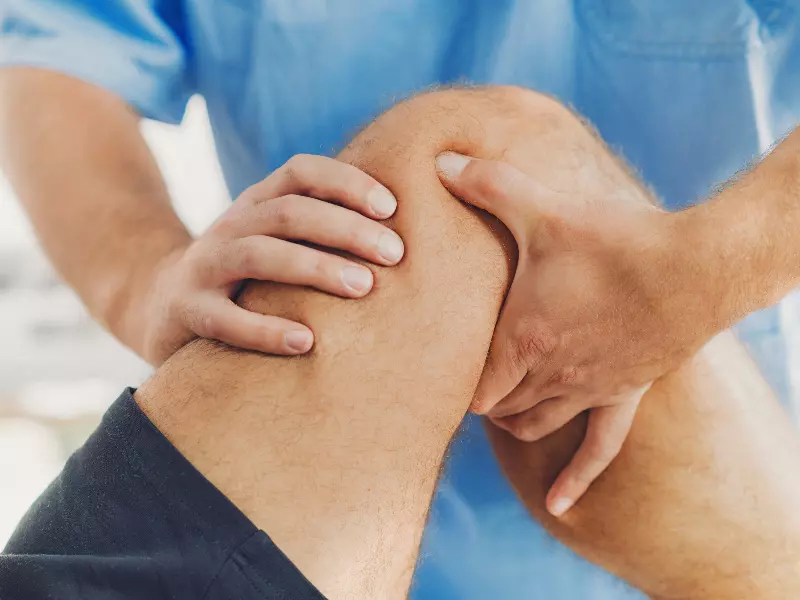
Physical Therapy in Champlin, MN
Our physical therapists create personalized rehab plans to:
- Strengthen the muscles that support your knees
- Improve joint alignment and tracking
- Enhance stability and balance to prevent re-injury
- Restore confident, pain-free movement patterns
Whether you’re recovering from an injury or fighting arthritis, PT is a proven, foundational step toward long-term relief.
PRP Injections (Platelet-Rich Plasma)
PRP is a cutting-edge regenerative treatment that uses your own blood to promote rapid tissue healing. After drawing a small sample of your blood, we concentrate the platelets and inject them directly into the injured area of your knee. These platelets release powerful growth factors that:
- Accelerate healing in tendons, ligaments, and cartilage
- Reduce inflammation and joint pain
- Stimulate natural tissue regeneration
PRP is ideal for meniscus tears, early arthritis, tendonitis, and sports-related injuries.
A2M Injections (Alpha-2-Macroglobulin)
If you’ve been told you’re “bone-on-bone” or facing a knee replacement, A2M may be your best next step. This naturally occurring protein traps and neutralizes enzymes that destroy cartilage in arthritis.
Benefits of A2M:
- Slows or halts cartilage breakdown in osteoarthritis
- Reduces chronic inflammation and joint pain
- Helps preserve joint integrity and mobility
- Often delays or avoids the need for surgery
360° Integrated Care Plans
Many patients benefit most from a comprehensive approach that combines:
- Physical therapy for mobility and strength
- PRP or A2M injections for regeneration or protection
- Chiropractic adjustments for postural and pelvic alignment
- Red light laser or shockwave therapy for pain reduction and tissue healing
- Nutritional support to reduce systemic inflammation
⭐ Patient Success Story
“I went from hobbling upstairs to hiking again in just eight weeks. PRP plus PT at Team Health Care brought my knee—and my life—back.”
— Sarah M
Try These Two Home Exercises to Support Knee Stability
IT-Band Cross-Over Stretch
Why it helps: The iliotibial (IT) band is a thick connective tissue along the outside of the thigh. When it’s too tight, it can pull on the knee and create lateral pain or instability. Stretching it helps reduce pressure on the outer knee and improves overall hip mobility.
How to do it:
- Stand tall and cross your right leg in front of your left.
- Lean to the left until you feel a stretch along your outer right thigh and hip.
- Hold for 30 seconds. Switch sides.
- Repeat 2–3 times per side, once or twice daily.
Gluteus Medius Activation (Side-Lying Leg Raise)
Why it helps: The gluteus medius is a key hip stabilizer that controls how your knee moves with every step. If this muscle is weak, the knee tends to collapse inward, increasing your risk of pain, tracking problems, and long-term joint damage. This simple activation drill strengthens the glute medius and improves knee alignment.
How to do it:
- Lie on your side on a firm surface (like a table or yoga mat) with your legs straight
- Keep your hips stacked—don’t let your top hip roll backward. Place your top hand on your hip to help stabilize.
- Slowly lift your top leg 12–18 inches while keeping it in line with your body (don’t rotate or swing it forward).
- Lower with control.




Common Causes of Knee Pain in Champlin, MN
7 Common Causes of Knee Pain—And How They Damage Your Joint
Osteoarthritis & Cartilage Loss
Osteoarthritis is the most common form of knee degeneration, especially in adults over 50. Over time, the protective cartilage that cushions your joint begins to wear thin—either from repetitive use, previous injury, or simply aging. As cartilage erodes, bone rubs against bone, creating inflammation, swelling, and a deep, aching pain that often worsens with activity or in the morning. Many patients also experience cracking, grinding, or a feeling of stiffness that makes it hard to bend or straighten the knee fully. Left untreated, osteoarthritis can significantly limit mobility and independence.
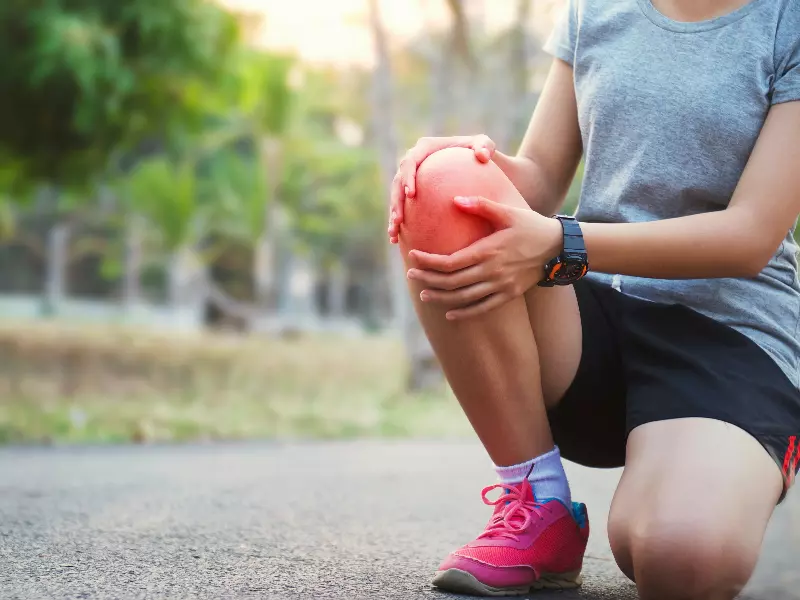
Meniscus Tears
Your meniscus is a crescent-shaped piece of cartilage that acts like a shock absorber between the femur and tibia. A meniscus tear can happen suddenly during sports, a misstep, or a quick twist—or it may occur gradually as the cartilage weakens with age. Symptoms often include sharp pain, catching, locking, or clicking deep in the joint, especially during pivoting or squatting. Because the meniscus has a limited blood supply, it heals slowly and may worsen without proper care. If untreated, a meniscus tear can speed up arthritis and compromise long-term joint health.
Ligament Injuries (ACL, MCL, PCL, LCL)
Your knee contains four major ligaments that keep the joint stable during movement. Injuries to the ACL (anterior cruciate), MCL (medial collateral), PCL (posterior cruciate), or LCL (lateral collateral) are common in athletes but can happen to anyone during a slip, fall, or awkward movement. These injuries often cause immediate swelling, bruising, and a feeling that the knee may “give out” or buckle. Without proper rehab, ligament injuries can lead to chronic instability and early joint degeneration. At Team Health Care Clinic, we assess the extent of the injury and build customized rehab or regenerative protocols to restore function.
Patellofemoral Pain Syndrome (“Runner’s Knee”)
Patellofemoral syndrome is a common condition where the kneecap (patella) doesn’t glide properly along the femur. Poor alignment, hip weakness, flat feet, or muscle imbalances in the quads can all cause the kneecap to track off-center, irritating the surrounding cartilage and tissues. Patients often feel a dull, aching pain around or behind the kneecap—especially when sitting for long periods, going downstairs, or doing squats. Catching it early and correcting the underlying mechanics can prevent long-term damage and help you return to pain-free activity.
IT Band Tightness
The iliotibial (IT) band is a thick band of connective tissue that runs along the outer thigh from the hip to the shin. When the IT band becomes overly tight—often due to overuse, running, biking, or muscular imbalance—it can rub against the outside of the knee, leading to inflammation and sharp lateral knee pain. This condition, known as IT Band Syndrome, is especially common in runners and cyclists. It often flares up after longer distances and can become chronic without proper stretching, strengthening, and biomechanical correction.
Tendonitis & Bursitis
Tendons are strong cords that attach muscles to bone, and bursae are small, fluid-filled sacs that reduce friction around joints. Repetitive movements, squatting, jumping, or kneeling can cause these structures to become irritated. Patellar tendonitis (“jumper’s knee”) causes pain just below the kneecap, while quadriceps tendonitis is felt above it. Bursitis often causes a warm, swollen lump near the joint. These conditions are very responsive to early intervention—like physical therapy, laser therapy, and regenerative injections—before they progress into more chronic issues.
Post-Surgical Scar Tissue & Limited Range
Even if your knee surgery was technically successful, you may still experience nagging pain, tightness, or limited motion from internal scar tissue or poor rehab follow-up. Adhesions can form around the joint capsule, restricting motion and creating a “tight band” sensation that doesn’t go away on its own. In some cases, this scar tissue also causes nerve irritation, swelling, or pain with prolonged activity. At Team Health Care Clinic, we use manual therapy, soft tissue work, red-light laser, and advanced rehab protocols to break through post-surgical restrictions and get you back to full function.
Frequently Asked Questions
Do PRP or A2M injections hurt?
Most patients say it feels like a bit of pressure—quick and very tolerable.
How soon will I feel relief?
Many feel improvement within 2–4 weeks. Full benefits typically build over 3–6 months.
Are regenerative treatments covered by insurance?
PRP and A2M are generally self-pay. We offer transparent pricing and flexible payment plans.
Can physical therapy alone fix my knee pain?
In many cases, yes—especially if it’s caused by muscle imbalance. For more advanced degeneration, we may add PRP or A2M to your treatment.
What if I’ve been told I’m “bone-on-bone”?
Even in advanced cases, we’ve helped many patients reduce pain and avoid surgery with A2M + rehab strategies.
How do I know if I need PRP or A2M?
Our providers will review your exam, imaging, and history to recommend the right option for your specific case.
How do I get started?
Schedule a comprehensive knee evaluation by calling 763-323-1492 or requesting an appointment online.
Reclaim Your Movement. Restore Your Purpose.
Knee pain shouldn’t control your life. Whether you’re chasing grandkids, working on your feet, or training for your next 5K—we’ll help you get back to living without limits.
$69 New Patient Special
Includes Full consultation, In-depth exam, Chiropractic adjustment, Action plan, Targeted muscle therapy (ex. electrical muscle stimulation).