



Shoulder pain has a way of changing daily life faster than most people expect. At first, it might feel like a small annoyance — a pinch when reaching into the back seat, soreness after a workout, or discomfort when rolling onto your side at night. Many people assume it will pass on its own.
Sometimes it does.
But when shoulder pain lingers, it often affects much more than movement. Sleep becomes inconsistent. Exercise routines get put on hold. Even simple tasks like getting dressed, lifting groceries, or carrying a child can suddenly require planning.
The shoulder is one of the most complex joints in the body. It was designed for mobility, allowing us to reach, throw, lift, push, and pull. That remarkable range of motion, however, also makes it vulnerable to strain when something in the surrounding system is not working well.
At Team Health Care Clinic in Champlin, MN, we understand how frustrating shoulder pain can be — especially when it prevents you from living normally.
Our goal is not simply to quiet symptoms for a short time, but to understand why the problem developed and help you return to comfortable, dependable movement.
Whether your pain started gradually or followed an injury, our team is here to help you find clear answers and a path forward.
What Makes Our Approach Different?
One of Team Health Care Clinic’s defining strengths is that multiple specialties work together under one roof.
Instead of patients trying to coordinate care between separate offices, our providers collaborate daily. Physical therapists, chiropractic physicians, medical providers, and rehabilitation specialists communicate directly with one another, creating a treatment experience that feels connected rather than fragmented.
Patients often tell us how relieving it is not to piece their care together on their own.
Together, our team focuses on identifying the root cause of shoulder pain — because the shoulder does not function in isolation.
It depends heavily on the neck, upper back, rib cage, muscles, and nervous system to move smoothly and stay stable. When one of these areas loses mobility or strength, the shoulder is frequently forced to compensate. Over time, that compensation is usually what creates irritation.
Rather than focusing solely on the area that hurts, we step back and evaluate how your body functions as a whole. This broader view often reveals contributing factors such as:
- Poor shoulder blade control
- Postural strain from prolonged sitting
- Muscle imbalance
- Joint stiffness
- Movement patterns that overload the shoulder
- Weakness lingering after a previous injury
Finding these contributors early allows us to create a treatment plan that lasts, rather than one that simply settles things down for a few weeks.
Another advantage of a collaborative model is timing. If your shoulder would benefit from more than one type of care, adjustments can be made quickly without unnecessary delays.
The result is care that feels organized, intentional, and centered around your recovery.
$69 New Patient Special
Includes Full consultation, In-depth exam, Chiropractic adjustment, Action plan, Targeted muscle therapy (ex. electrical muscle stimulation).
How Our Care Plan Works
1. Body
Misalignment = Miscommunication = Misery. Pain, tightness, poor posture, inflammation—it’s all your body screaming for help. When the spine is off, your nervous system can’t work right. We realign the body through chiropractic, physical therapy, and acupuncture to get you moving, healing, and living again.
2. Brain
Your brain controls every cell, organ, and system in your body. If the brain-to-body connection is blocked—even slightly—you feel it: pain, fatigue, brain fog, anxiety. Most doctors miss this. We don’t. We restore the brain’s ability to run the show—so your body can finally heal. Because when your brain fires right, your whole body functions better. And when that connection is restored, everything changes.
3. Chemistry
Your Gut Talks to Your Brain—Loudly . 80% of your brain’s neurotransmitters come from your gut. If your digestion, blood sugar, or hormones are off, your brain will suffer. We use advanced functional medicine to fix the chemistry behind your symptoms—because supplements and meds aren’t enough when the root is still there.
How We Treat Shoulder Pain in Champlin, MN
Every shoulder tells a different story, which is why treatment always begins with a careful evaluation. Once we understand what is driving your pain, we build a plan around your needs, activity level, and goals.
Most patients experience what we often describe as a team approach, where providers work together to guide each stage of recovery.
Restorative Medical Care
Restorative medical care emphasizes nonsurgical and nonpharmacologic methods whenever possible to help your shoulder recover naturally.
Our nurse practitioner performs a thorough examination and, when appropriate, uses imaging to understand the underlying cause of your pain better. From there, treatment may include recommendations such as:
- Physical therapy
- Chiropractic care
- Natural injection therapies
- Acupuncture
- Shockwave therapy
- Additional supportive options based on your condition
Rather than relying on a single intervention, care is typically layered to support healing from multiple angles.
Most patients progress through three general phases.
The initial goal is to reduce pain and improve the shoulder range of motion. When irritation decreases, the joint is better able to tolerate movement.
The next goal is regaining strength and function. This stage is essential for preventing the problem from returning.
The final goal — especially for our athletes and active patients of all ages — is peak performance. We want your shoulder not just working again, but working well.
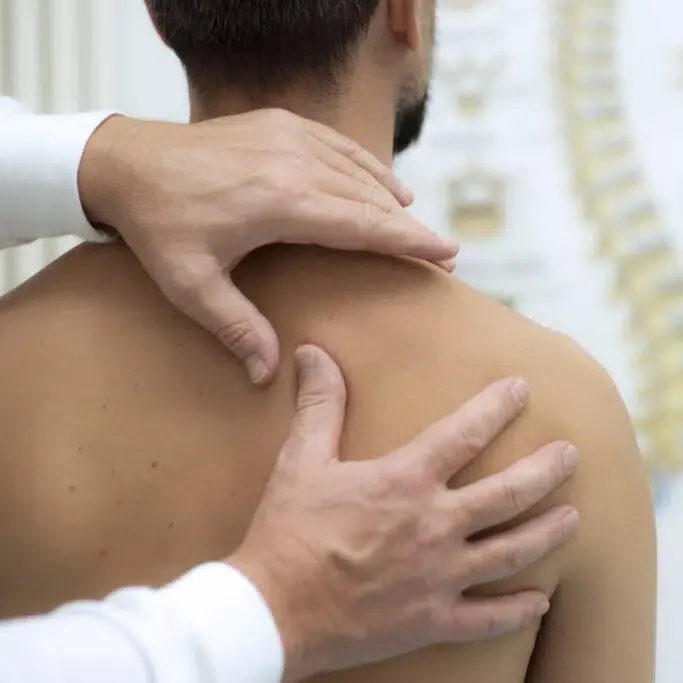
Physical Therapy
Physical therapy plays a central role in shoulder recovery because it focuses directly on how the joint moves.
Treatment often includes guided exercises to improve mobility, strengthen stabilizing muscles, and restore balance across the shoulder complex. Hands-on techniques may also be used to improve joint mechanics and reduce discomfort.
Equally important is education. Understanding what contributed to the problem — and how to avoid repeating it — helps protect your progress long after formal care ends.
A widely referenced study published in the Annals of Internal Medicine compared physical therapy with corticosteroid injections for shoulder impingement syndrome.
Both groups experienced meaningful improvement. However, patients who received injections were more likely to return for additional care within the following year, often requiring repeat injections or further treatment.
Physical therapy produced comparable relief while helping patients build the strength and movement control that support longer-term stability.
For many individuals hoping to avoid repeated procedures, therapy remains a strong and evidence-supported starting point.
Specific Chiropractic Care in Champlin, MN
Healthy shoulder movement depends heavily on the spine and rib cage. When these structures become restricted, the shoulder often absorbs extra stress.
Chiropractic adjustments may help restore joint motion and reduce mechanical strain on the joint.
It is not uncommon for patients to notice improved shoulder comfort once the upper back begins moving more freely.
Movement Retraining and Functional Rehabilitation
Pain changes behavior. Sometimes subtly.
People begin guarding their shoulders, recruiting other muscles, or avoiding certain positions altogether. While protective at first, these patterns can prolong dysfunction.
Functional rehabilitation focuses on restoring natural movement so the shoulder can operate efficiently again.
This is especially valuable for:
- Active adults
- Athletes
- Golfers and tennis players
- Fitness enthusiasts
- Individuals returning to exercise
Our aim is not just symptom relief — it is helping you trust your shoulder again.
Functional Medicine
Beyond the joint and the muscle, the body’s internal environment plays a major role in how tissues heal, respond to stress, and tolerate strain.
This is where our functional medicine provider and health coaches can help.
Functional medicine looks at the body from a different perspective, and for some, it can complete the missing piece. Because instead of asking, “Why is my shoulder bothering me?” they are asking, “What is preventing the shoulder from recovering?”
One of the most common contributors is inflammation. Inflammation is not always a bad thing. In fact, it is a necessary part of the healing process. When you strain a muscle or overload a joint, the body sends inflammatory cells to help repair the injury. But if the inflammation sticks around too long, issues can arise, including tissues becoming more sensitive, slower recovery, and sometimes amplifying pain signals.
Several factors can influence inflammatory load in the body, including:
- Blood sugar instability
- Highly processed diets
- Poor sleep
- Ongoing stress
- Hormonal shifts
- Gut health concerns
- Nutrient deficiencies
When these issues are present, even a relatively minor shoulder injury may take longer to improve. Lowering unnecessary inflammation creates an internal environment that allows healing to occur more efficiently.
However, if you find yourself in this boat and wonder if your body is inflamed and preventing healing, there is support! Some things we will focus on are:
- Nutrition – emphasizing whole foods that help regulate inflammatory pathways and support tissue repair.
- Blood sugar balance – stable glucose levels are closely tied to healthier connective tissue and more predictable healing.
- Targeted supplementation – certain nutrients can support the body’s natural inflammatory response.
- Sleep and stress regulation – both have a measurable impact on recovery capacity.
Now, as helpful as this can be, functional medicine is rarely a standalone solution for shoulder pain, but when paired with physical therapy, chiropractic care, and restorative medical treatment, it can strengthen the body’s ability to recover.
This is another advantage of receiving care in a clinic where providers collaborate. If your shoulder would benefit from this additional perspective, it can be incorporated smoothly into your care plan.
Shoulder pain is not always just a wear-and-tear problem. Often, it is a combination of mechanical stress and biological readiness.
When both are addressed, patients frequently notice steadier progress and greater resilience when they return to normal activity.
Our goal is not simply to help your shoulder feel better for now — it is to help your body support strong, reliable movement for the long term.




Common Causes of Shoulder Pain in Champlin, MN
Shoulder pain can develop suddenly after trauma or build gradually through repeated stress and improper motions. Below are several conditions we commonly evaluate.
Shoulder Arthritis
Arthritis in the shoulder can be due to ingrowing injuries or repetitive overuse in some shoulders.
When overused or injured, the joint begins to wear down, sometimes leading to stiffness, grinding sensations, and discomfort. If the issue is beyond our scope of repair, we can refer you to our trusted surgeons. Generally, many find relief is possible and do not need surgery. By working with our team and improving mechanics, strengthening surrounding muscles, and supporting tissue health, we can make a huge difference for a patient.
Rotator Cuff Injury
The rotator cuff consists of four muscles that stabilize the shoulder and guide arm movement.
These tendons may become irritated from overuse, repetitive motion, or a fall. This can lead to a partial or full rotator cuff tear.
Symptoms of these could be:
- Weakness
- Pain when lifting the arm
- Night discomfort
- Limited motion
- Aching in the upper arm
Many rotator cuff injuries respond very well to conservative care when treated before significant weakness develops.
Frozen Shoulder
Frozen shoulder is a common injury we treat and often develops when the joint capsule thickens and tightens, leading to progressive stiffness or immobility. Regaining strength and mobility after this injury can take time. Our therapy team does a great job of challenging our patients to increase the range of motion without further injuring the shoulder.
Tendinitis and Bursitis
Inflammation of the tendons or bursa is what commonly leads to these injuries, and the longer you leave it untreated, the longer it takes to heal and the more likely it is to worsen.
Shoulder Impingement
Shoulder impingement occurs when tendons become compressed during movement, often during overhead motion. Repetition, posture, and muscle imbalance often play a role. When this is not addressed, it can become irritated, increasing the risk of rotator cuff injury. The earlier you can be evaluated for a pain or shoulder impingement, the better!
Pain Referred From the Neck
Not all shoulder pain originates in the shoulder itself. Sometimes neck irritation can mimic shoulder injury symptoms. Our team can help determine the source of your pain through an exam and proper testing.
Don’t wait! Many people wait longer than they should before having their shoulder evaluated, and this can affect the outcome. If you relate to any of the above common conditions or have persistent shoulder pain, give us a call at 763-323-1492.
Frequently Asked Questions
Do all shoulder injuries require surgery?
No. Our innovative team approach results in surprising outcomes when other isolated treatments fail. Surgery is typically considered only when significant structural damage is present or when other treatments have not helped.
Is it better to rest or keep moving?
Complete rest won’t fully solve your issue. However, guided movements by a trained specialist help maintain mobility and prevent the shoulders from weakening or stiffening.
How long does recovery take?
Recovery varies depending on the condition and the duration of symptoms. Some people notice improvement within weeks, while others need a few months to rebuild strength and mobility.
Are injections always necessary?
Not necessarily. In many situations, they can be helpful; however, we do not prescribe cortisone injections because repeated injections can accelerate joint arthritis progression. If cortisone is injected in your shoulder by another clinic, the results are often most effective when paired with rehab.
What if my pain keeps returning?
Recurring pain often signals that an underlying contributor has not been fully corrected. A more comprehensive evaluation can identify what continues to overload the joint.
Moving Forward
Our team at Team Health Care Clinic wants to help get to the bottom of your pain and help you restore your function!
Call (763) 323-1492 or request an appointment at www.teamhealthcareclinic.com to schedule your evaluation.
$69 New Patient Special
Includes Full consultation, In-depth exam, Chiropractic adjustment, Action plan, Targeted muscle therapy (ex. electrical muscle stimulation).